Pilot scorecard
Florastor Probiotic: ingredients and label score
Florastor scored 5 out of 6 for label disclosure under methodology
v1.17, read from the label as captured on 2026-09-26. The full ingredient
list from the Supplement Facts panel is below the score.
Disclosure Facts
Florastor ProbioticFlorastor · label captured 2026-09-26
Disclosure score5/6
- 1. Exact amount for every active ingredient1 ✓
- 2. Standardization percentage stated1 ✓
- 3. Chemical form or strain named1 ✓
- 4. Dose within the trial range1 ✓
- 5. Certificate of analysis is public0 ✗
- 6. Per-serving amounts are complete1 ✓
Each criterion scores 1 or 0. No weighting, no partial credit.
Florastor Probiotic ingredients
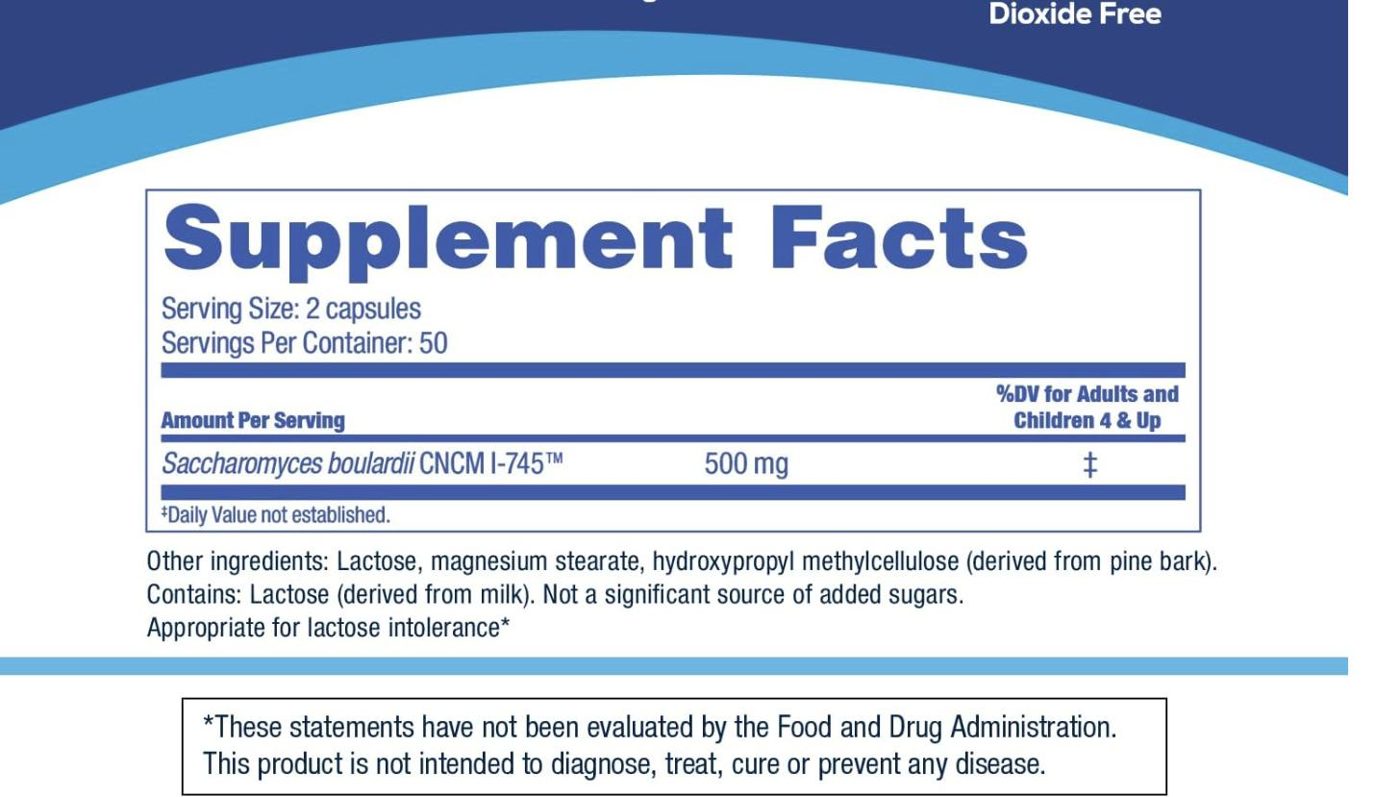
Every line of the Supplement Facts panel, as printed on the label captured 2026-09-26, typed out so
it can be read without opening the image. Amounts are per serving. The panel capture is the
record; where the capture cuts a line off, the table says so rather than filling it in.
Serving size: 2 capsules ·
Servings per container: 50
| Ingredient | Per serving | %DV |
|---|
| Saccharomyces boulardii CNCM I-745™ | 500 mg | not established |
Other ingredients. Lactose, magnesium stearate, hydroxypropyl methylcellulose (derived from pine bark). Contains: Lactose (derived from milk). Not a significant source of added sugars. Appropriate for lactose intolerance*
Why it scored this way
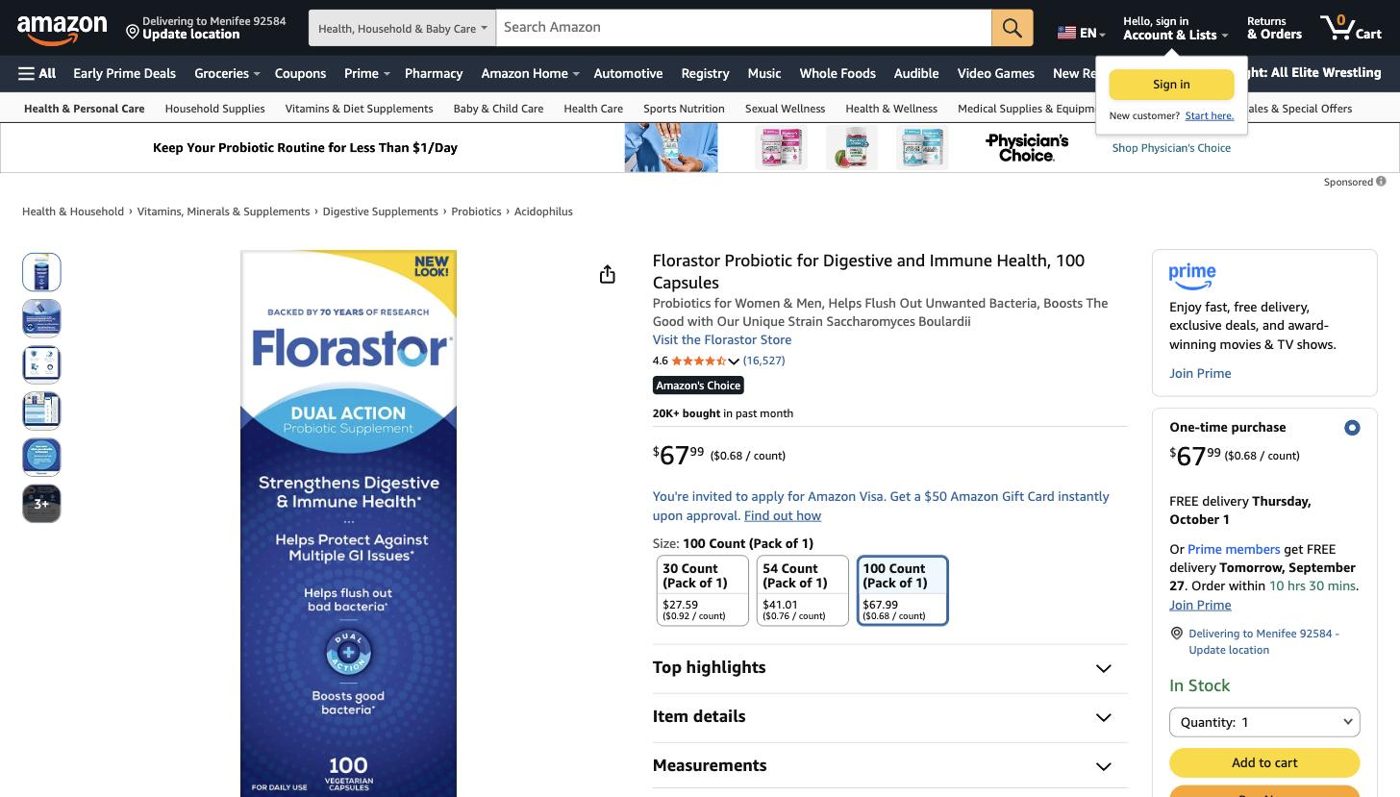
100ct variant, Amazon listing B01NB0G1V8.
1
3. Chemical form or strain namedCNCM I-745 is a culture depositary designation (Collection Nationale de Cultures de Microorganismes), not a species name or a marketing name.
1
4. Dose within the trial rangeUnder methodology v1.12, the first product in the sample to take this point. The panel declares 500 mg of preparation rather than CFU, so the probiotic unit mismatch does not arise, and 500 mg falls at the floor of the 500-600 mg/day range set by adult trials of this strain (Seddik 2019 PMID 30694338, open-label; Salazar-Parra 2023 PMID 37400812). Corrected 2026-11-19: Sjomina 2023 (PMID 37942999) was previously counted and set the 1000 mg upper bound, but its own conclusion is that S. boulardii did not increase eradication and its positive subgroup results lost significance after Type I error adjustment, so under the positive-outcome rule it does not set the range. The score is unchanged. Maev 2025 excluded from setting the range under the independence rule: it dosed Enterol, a Biocodex product, and Biocodex manufactures Florastor. The outcome objection is published alongside the v1.12 ruling.
0
5. Certificate of analysis is publicNo publicly accessible third-party certificate of analysis located 2026-09-26. The search covered the 10 listing images, florastor.com navigation and footer (no Quality, Testing, Lab Results or Transparency link exists), the florastor.com FAQ page, and a site-scoped web search for 'certificate of analysis'. Recorded as a negative finding, not a claim that none exists.
Questions about this label
What are the ingredients in Florastor Probiotic?Per the Supplement Facts panel captured 2026-09-26, one serving (2 capsules) lists: Saccharomyces boulardii CNCM I-745™ (500 mg). Other ingredients: Lactose, magnesium stearate, hydroxypropyl methylcellulose (derived from pine bark). Contains: Lactose (derived from milk). Not a significant source of added sugars. Appropriate for lactose intolerance*
Does the Florastor Probiotic label give an exact amount for every ingredient?Yes. Every active ingredient carries its own amount, so it scored 1 on criterion 1. The single active carries an exact amount, Saccharomyces boulardii CNCM I-745 500 mg. No proprietary blend on the panel.
Is Florastor Probiotic third-party tested?This audit checks one thing here: whether a third-party certificate of analysis (COA) for the product can be reached by the public, with no email gate and no account. None was located, so it scored 0 on criterion 5. That records what a documented search found, not a claim that the product was never tested. No publicly accessible third-party certificate of analysis located 2026-09-26. The search covered the 10 listing images, florastor.com navigation and footer (no Quality, Testing, Lab Results or Transparency link exists), the florastor.com FAQ page, and a site-scoped web search for 'certificate of analysis'. Recorded as a negative finding, not a claim that none exists.
Are the doses in Florastor Probiotic backed by clinical trials?The label discloses a dose inside the range human trials used, so it scored 1 on criterion 4. Under methodology v1.12, the first product in the sample to take this point. The panel declares 500 mg of preparation rather than CFU, so the probiotic unit mismatch does not arise, and 500 mg falls at the floor of the 500-600 mg/day range set by adult trials of this strain (Seddik 2019 PMID 30694338, open-label; Salazar-Parra 2023 PMID 37400812). Corrected 2026-11-19: Sjomina 2023 (PMID 37942999) was previously counted and set the 1000 mg upper bound, but its own conclusion is that S. boulardii did not increase eradication and its positive subgroup results lost significance after Type I error adjustment, so under the positive-outcome rule it does not set the range. The score is unchanged. Maev 2025 excluded from setting the range under the independence rule: it dosed Enterol, a Biocodex product, and Biocodex manufactures Florastor. The outcome objection is published alongside the v1.12 ruling.
The evidence
Scores are read from the live label, captured by screenshot on the date shown. A score describes
what the label discloses. It says nothing about whether the product works, and nothing here was lab-tested.
See this row in the dataset →
Compare with other products
Groups are read from the dataset, not curated: the brand and the score come from this product's own
row, and the format group comes from words in its own name. A product can appear under more than one heading.
A head-to-head page sets the two labels side by side on the same six criteria. A higher score
means the label discloses more, not that the product is better.
Scored a point either side
In rank order in the captured sample: ← Nature's Bounty Probiotic Acidophilus · All 18 scorecards · Align Probiotic Pro Formula →